The Trial of Galileo

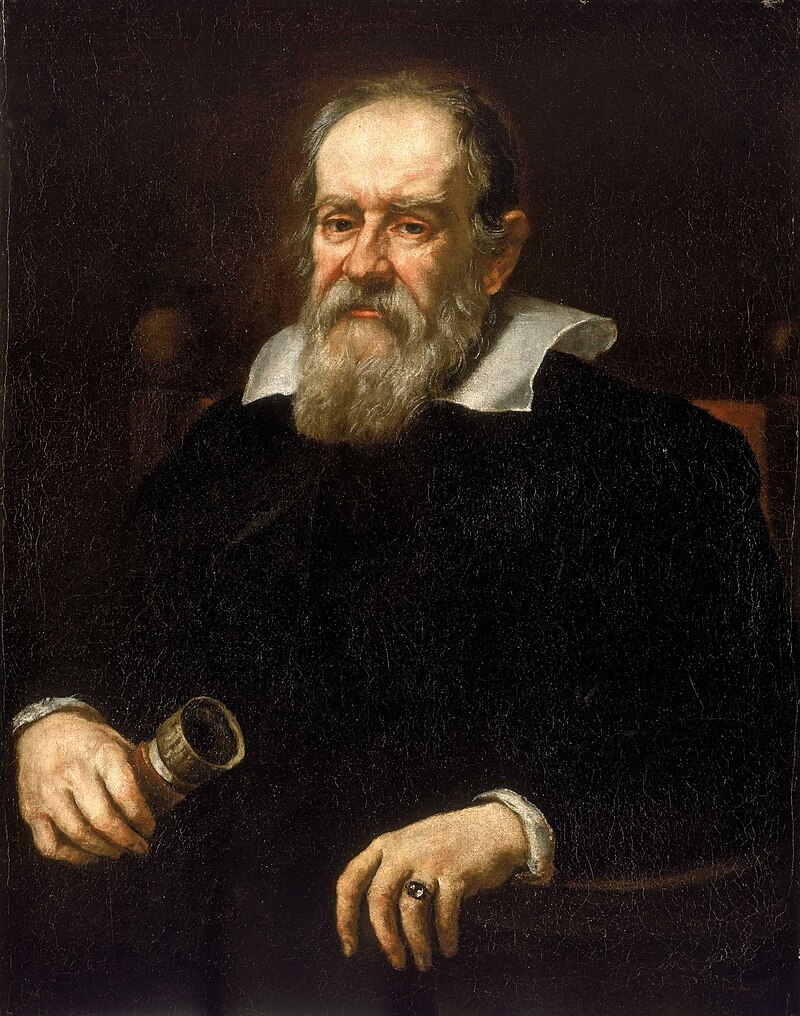
El retrato de Galileo Galilei (pintado por Justus Sustermans 1636) , es una obra fascinante que captura la esencia del famoso científico renacentista.

The portrait of Galileo Galilei (painted by Justus Sustermans in 1636) is a
fascinating work that captures the essence of the famous Renaissance scientist.

Galileo Galilei

one of the greatest scientists in history, was persecuted by the Catholic
Church in the 17th century for his ideas about the universe. In 1633, he was brought
before the Inquisition for teaching and defending the heliocentric model proposed by
Copernicus, which claimed that the Earth was not the center of the universe, but instead
orbited around the Sun.
The Trial of Galileo

During the trial, Galileo was accused of "heresy" for challenging the official doctrine of
the Church, which supported the geocentric model. Although Galileo had observational
evidence (such as the moons of Jupiter), he was pressured to recant his ideas under the
threat of torture. In his defense, Galileo argued that science and religion should not be in
conflict.

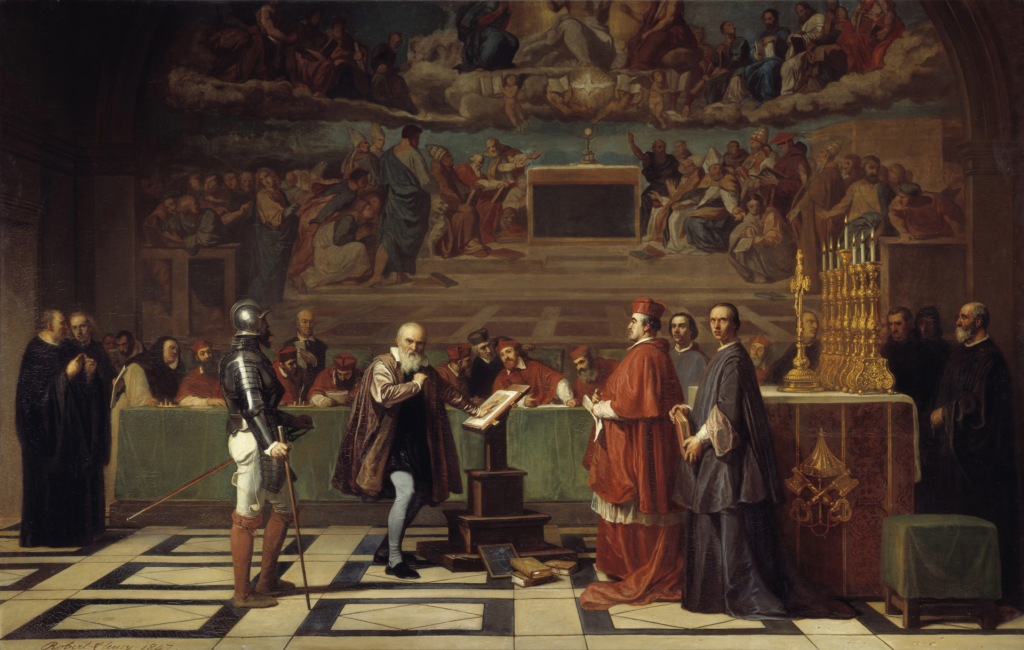
Representación del juicio de Galileo Galilei : El Proceso a Galileo Galilei  se inició alrededor de 1610 y culminó con el juicio y condena de Galileo Galilei por la Inquisicion Romana en 1633.

Representation of Galileo Galilei’s trial: The Trial of Galileo Galilei began
around 1610 and culminated in the trial and condemnation of Galileo by the Roman
Inquisition in 1633.

Document of the recantation: The letter consists of seven pages, dated
December 21, 1613, and signed by "G.G."

Although he was not sentenced to death, he was sentenced to life under house arrest.
Over the years, his case became a symbol of the intellectual suppression of scientific
ideas in favor of the Church’s dogmatic beliefs.